

TENSED MUSCLES MAIDEN LANE ESTATE
Artist Steffi Klenz created an immersive interpretation of the Maiden Lane Estate and its residents. Prepared for Camden Alive the work manifested as an augmented reality representation and is included within the Camden People’s Museum.
Steffi Klenz’ photographic practice is fundamentally concerned with challenging conventional conceptions of architectural representation and particularly focuses on Modernist architectural buildings as an investigative tool into the potential of architectural photographic representation and the exploration of spatiality. Her works aim to bridge the gap between the flat surface of the photograph and the spatial experience of architecture to open up a new way of understanding space and considering the current relationship between photographic technology and architectural representation. As one of seven invited contemporary artists for the innovative London Borough of Culture Programme commissioned by the Mayor of London, Klenz created the work Tensed Muscles in response to the Maiden Lane Estate in Camden, North London. Klenz worked in collaboration with Camden Council for three years and her project Tensed Muscles (2021) has had various outputs.
During 2019/2020 Klenz spent time at Maiden Lane talking with residents and immersing herself in the architecture of the space. To develop her work, she became the artist in residence at the Camden Local Studies and Archives Centre in London, engaging with the histories of the estate, using maps, newspapers, court reports and archive photographs. The Maiden Lane Estate, designed by architects Benson and Forsyth, was a visionary, post-war modernist social housing scheme which included plans for 400 new council homes, shops, sports facilities, a community centre, a primary school and open spaces.
Tensed Muscles explores the relationship between the architectural promise of modernist living; of equality and opportunity and the utopian hope for a better society, and the reality of living in Maiden Lane in the 40 years since its inception, which saw the escalation of drug use, prostitution, gun and knife crime during the 1980’s and 90’s. Maiden Lane became known as a poor, violent and run-down housing estate with most of the council homes of the estate being sold to private ownership as part of Margaret Thatcher’s flagship scheme in the 1980’s. (1) Tensed Muscles explores the entanglements of the political and socio-economic aspects of the neighbourhood and Klenz use the metaphors of the ‘phantom limb’ (a medical term first coined by American physician Ronald Melzack in 1871 and further developed by Canadian psychologist Ronald Melzack in the 1980’s) and ‘conversion disorder’ to present this.
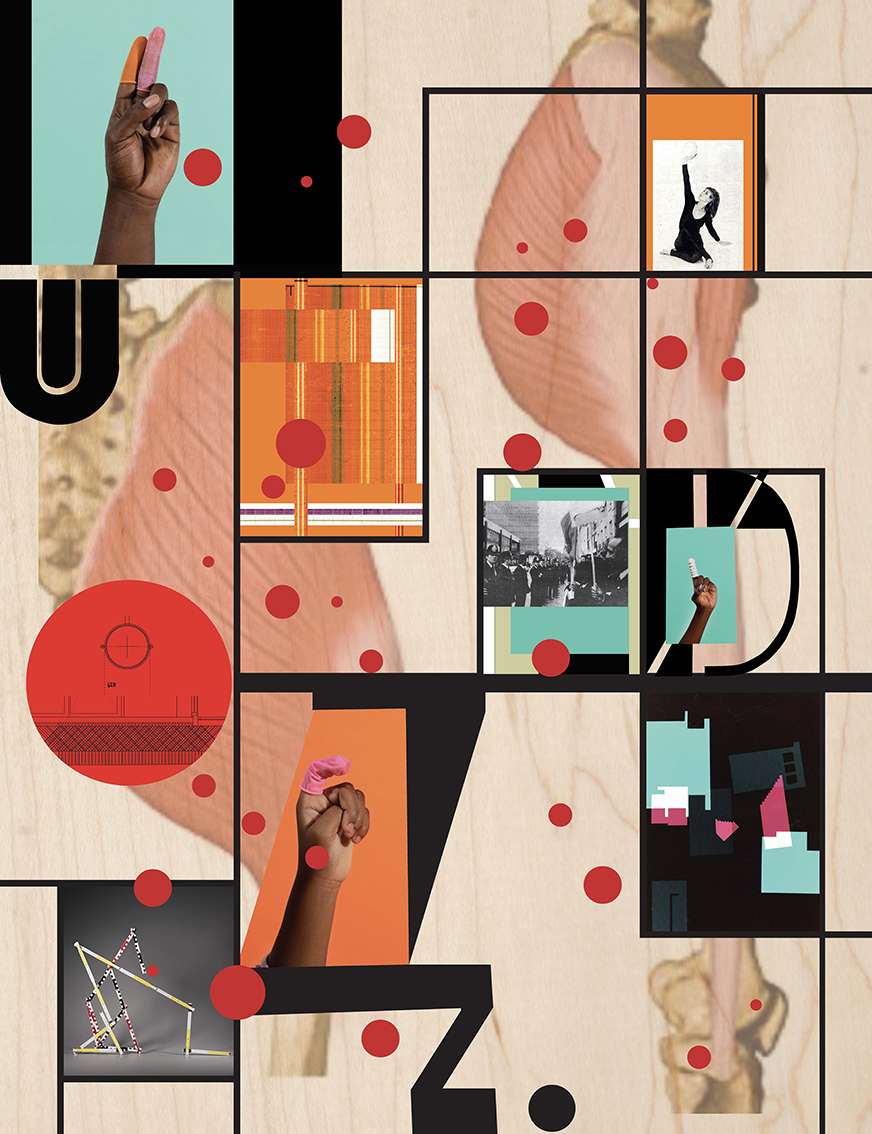
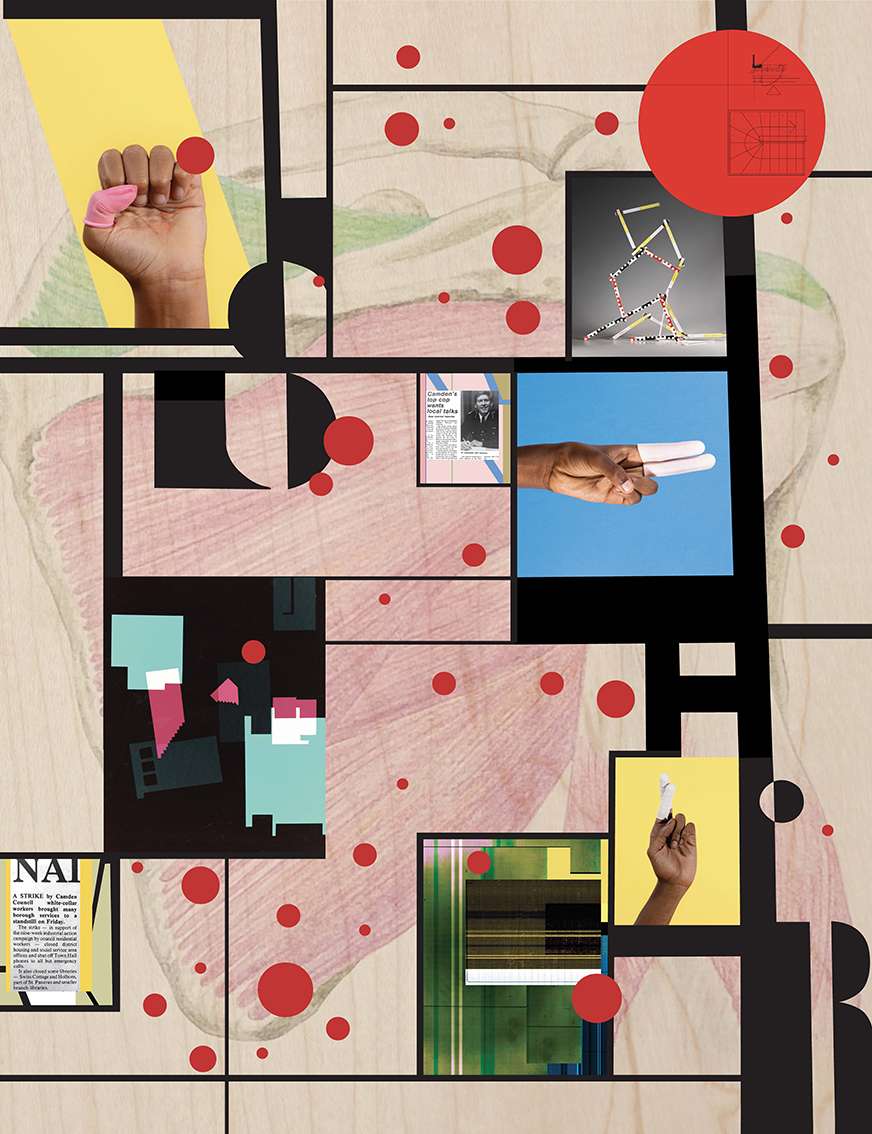
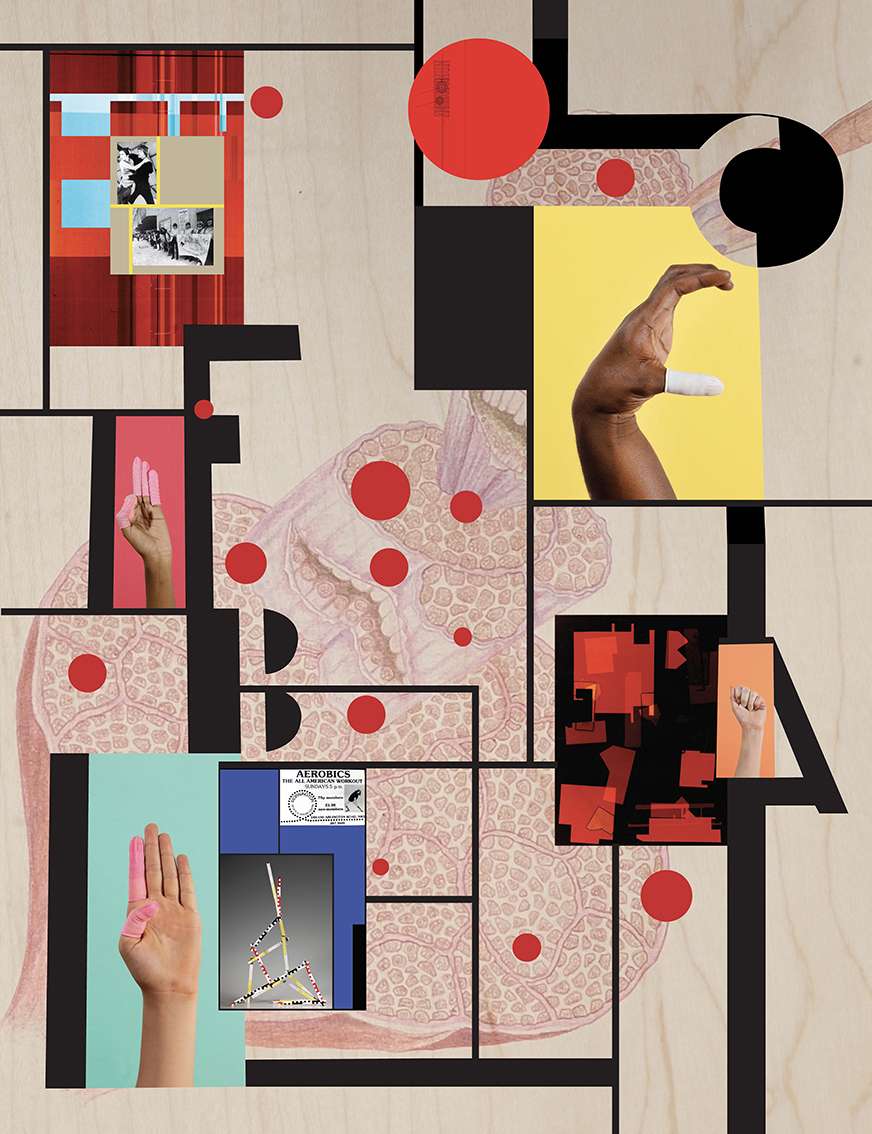
Studio photographs of Maiden Lane residents’ disconnected hands are used as a metaphor for the disappearance of the working class who the estate was originally built for. In Klenz’ work the phantom limb is linked to the working class or less fortunate/troubled/poor people who society wants to metaphorically amputate from our larger societal body. In Tensed Muscles, Klenz activates the body of the local community living there, presenting a ‘speaking body’ by using the hands of the local residents representing letters of the fingerspelling alphabet as sign language. The final graphic design of the hand photographs is linked to Abeceda (‘Alphabet’), a book designed by Czech artist Karel Teige in 1926 presenting the dancer Milča Mayerová evoking the letters of the alphabet through physical posture.
[1] Klenz’ work raises questions about the limited building schemes of social housing for people with lesser income, a major political issue in the UK since Margaret Thatcher allowed social houses to be sold to private ownership without ever rebuilding the stock of council houses. To this day in the UK and many other countries the vast majority of housing stock is in private ownership, with local governments unable to provide secure housing for poorer or elderly people. The issue of affordable housing continues, leaving many people homeless or for years on waiting lists for social housing.
Klenz is particularly interested in Sigmund Freud’s model of ‘conversion disorder’ whereby uncontrolled emotions or traumatic psychological trauma release themselves through the tensing up of muscles or muscle spasms resulting in a form of ‘bodily speaking’. Tensed Muscles illustrates this link through the large, coloured pencil drawings of tensed muscles on plywood. The variously sized red dots visible in the works refer to chiropractic trigger points of muscles in the body. Tensed Muscles is a palimpsest of various layers and references, interrogating the photographic medium, its history and its production methodologies itself, using various photographic technologies and methodologies from digital production to camera-less photography.
The images of sculptural yardsticks are studio photographs depicting the body measurements of some of the local residents on the estate. Both the images of the yardsticks as well as the images of the residents’ hands were produced during photography sessions with the local residents at the Maiden Lane Community Centre. Tensed Muscles also include archive photographs collated from the Camden Local Studies and Archives Centre in London. Another visual element of the large collage works are the photogram prints: Klenz used architectural plans of the estate and selected various housing shapes to make abstract looking photographs using the technique of photograms in her photographic darkroom. Another visual element is the abstract digital photographs that are of the microfilm reader captured by a portable digital hand-scanner used to undertake my research in the public archives. Instead of scanning actual archival material or photographs, I recorded the actual microfilm reader scanning the documents.
In Klenz’ exhibitions, she builds a wooden framework structure that connects the final images of Tensed Muscles with each other. She also incorporates the housing shapes displayed in the photograms as physical wooden shapes. During the duration of her exhibitions, Klenz allows the viewers to incorporated various red dots as part of installation. This adaption to the gallery space (each installation is site-specific to the gallery or museum) not only showcases the work but highlights the viewer’s own bodily existence, having to walk around and negotiate the installation. This enhances the viewer’s experience of her work but also suggests that navigating a terrain/building like the Maiden Lane Estate results in navigating through Klenz’ images and her gallery installation. What makes Klenz’ installation design interesting and divergent is that her re-conception of space and material is a metaphor for the fundamental transformations of two-dimensional planes into three-dimensional forms to be neither photography nor architecture but midway station between the two. Tensed Muscles produces the expansion of photographic images, as physical object, and as installation, presenting a process where the image moves from the reduction of capture to the production of encounter, constructing a multiplication of the spatial. Klenz challenges predominant models of architectural photography through a reconfiguration of the image of architecture: images and architecture come into direct interrelation, collapsing the discreted.
Maiden Lane Estate, designed by architects Benson and Forsyth, was a visionary, modernist scheme which included plans for 400 new homes, shops, sports facilities, a community centre, a primary school and open spaces. Due to financial pressures in the late 1970s the plans were not fully realised, resulting in a split site and years of practical and social challenges.